For years I hired confident people and regretted it. Here’s why competence builds the trust that confidence only borrows — and how to spot the difference before it costs you.
If you’ve ever sat across from someone who spoke beautifully, nodded at all the right moments, and seemed absolutely convinced they could deliver — and later watched them fail so silently that you were the last to know — this post is for you.
I’ve made that hiring mistake. I’ve also been the person someone else hired because I sounded like I knew what I was doing, only to find out I didn’t — yet. That’s the uncomfortable thing about trust in business. It’s easy to hand to someone who carries themselves like a leader. It’s much harder to earn with nothing but proof.
So here’s the question I’ve spent years untangling: When it actually matters — a project, a partner, a hire, a founder — do you trust confidence or competence?
I used to think confidence was a signal of competence. Now I know it’s often just confidence rehearsed in a mirror.
The Day Confidence Failed Me — Twice in One Month
Early in running my solar company, I hired a project manager who interviewed like a dream. Eye contact. Firm handshake. Previous experience listed with impressive company names. He told me, “I’ve handled projects larger than this. Don’t worry, I’ll make sure everything runs smoothly.”
I believed him. Why wouldn’t I? He looked certain. I mistook that certainty for ability.
A month later, I walked onto a site to find 20 panels installed facing the wrong angle. The client was two days from net metering inspection. My confident project manager hadn’t visited the roof himself in a week. He just trusted the technicians, and the technicians trusted that someone else was double-checking. It was a chain of confidence with zero competence holding it together.
The same month, I hired a junior electrical supervisor who spoke softly, rarely made eye contact, and answered my technical questions with, “I believe so — but I’d want to measure that first.” I almost didn’t hire him. He seemed uncertain. Insecure.
He ended up catching a grounding fault that could have fried an inverter worth more than his annual salary. He didn’t speak much, but when he did, it was because he’d actually checked.
That month rewired my brain about trust.
Confidence Is a Trait. Competence Is a Track Record.
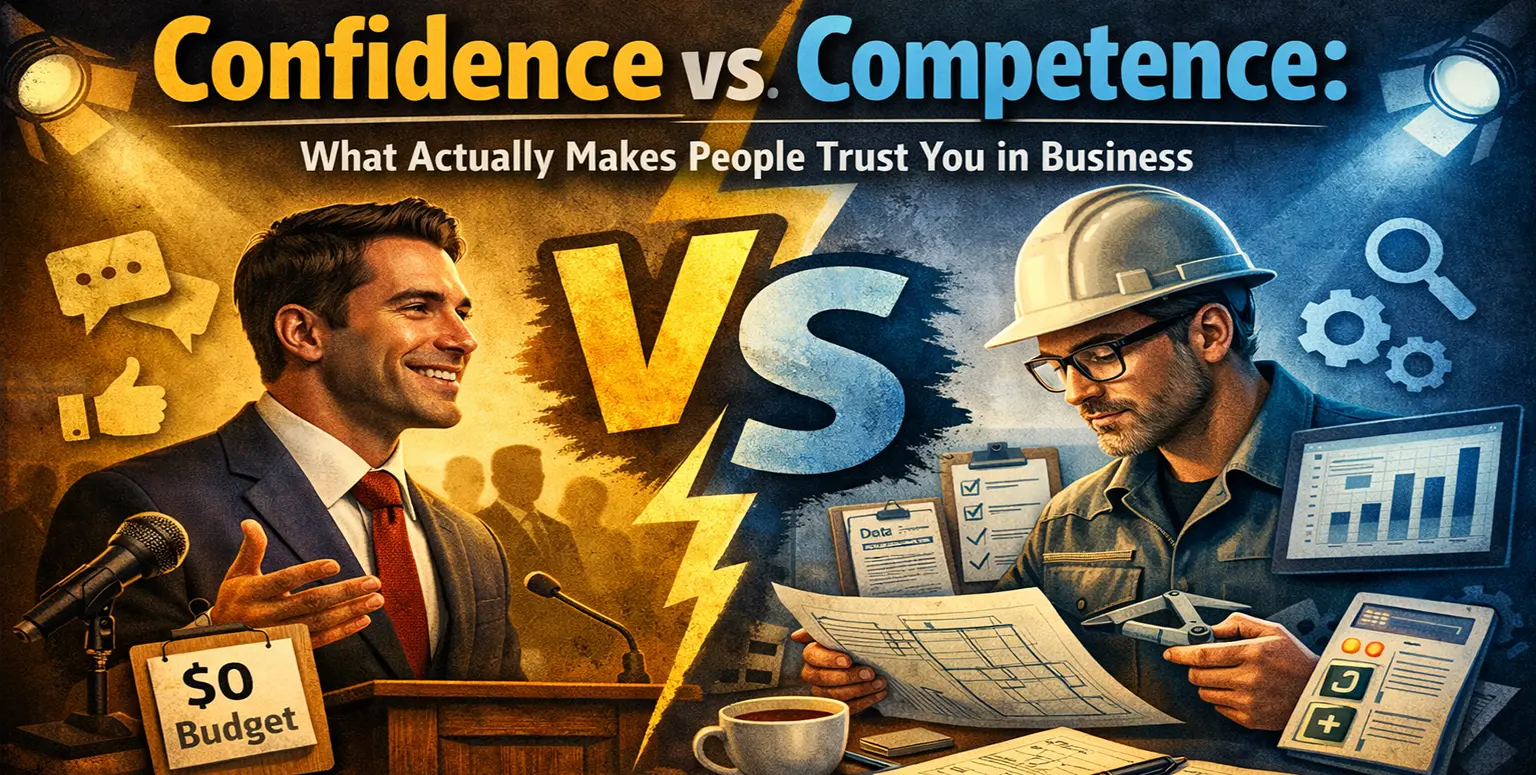
Confidence is how someone talks about what they can do. Competence is what they’ve actually done — repeatedly, under pressure, when no one was watching.
The problem is that humans are wired to trust confidence first. It feels good. It reduces our own anxiety. If someone says, “I’ve got this,” we offload our worry onto them. It’s a shortcut our brains love. But in business, that shortcut is expensive.
Competence rarely announces itself. It doesn’t stand in front of a room with a bold font. It sits in the corner, checks the numbers twice, and answers slowly because it respects the question.
And here’s what nobody tells you: long-term trust isn’t built on being impressive in the first conversation. It’s built on being boringly reliable across many conversations.
The Test I Now Use (Before Trust Is Given)
After enough expensive mistakes, I stopped letting confidence make the first move. Now I use three filters before I trust someone’s ability — whether it’s a business partner, a key hire, or even a supplier.
1. Ask “How Did You Mess This Up Before?”
Everyone pretends to have perfect experience. The competent ones don’t hide their failures — they remember them technically. They can tell you exactly what went wrong, why, and what they changed. The confident-but-incompetent will give you a smooth “challenges happen” speech with no specifics.
If they can tell me the model number of the inverter that failed, the exact miscommunication with the client, and the mistake they made in their first company — I lean in. Not because they failed, but because they learned specifically.
2. Look for the Pause
Competent people hesitate before answering hard questions. They think. They might say, “I’m not 100% sure, let me check.” Confidence often answers before the question is fully processed. The brain moves too fast because it prioritizes image over accuracy.
Now, when someone doesn’t pause at a genuinely complex technical or strategic question, I get suspicious — not impressed.
3. Watch What They Check
In solar, a competent person double-checks tilt angles, cable sizing, and earthing even when the design is “done.” In business, a competent person re-reads the contract, asks about worst-case scenarios, and verifies assumptions instead of assuming everything will go well.
Confident people often skip the checking part because they trust themselves too much. Competent people trust themselves just enough to know they could be wrong.
Who Should You Trust to Lead Something?
Not the loudest voice. Not the person with the smoothest presentation. Trust the person who worries about the details you forgot. The person who says “that might break here” and then fixes it before the meeting ends.
When I started building teams that lasted 11+ years — against all the advice that said solar companies don’t last in Pakistan — I wasn’t hiring for confidence. I was hiring for quiet ownership. People who felt personally bothered when something was wrong, even if no one was blaming them.
I’ve also learned this applies upward. When you want clients or investors to trust you, don’t perform competence. Demonstrate it. Share the exact numbers. Admit the risks. Tell them what might fail and what you’ve done to prevent it. That honesty is the single most underrated trust-builder in business.
So, Which One Deserves Trust?
Confidence without competence is just good marketing for a bad product. Competence without confidence is a problem too — because if you can’t communicate what you know, you might never get the chance to prove it. But if I have to choose between one in a person I’m betting my business on, I’ll pick competence every time.
Competence can learn to speak up. Confidence often doesn’t learn to admit it doesn’t know.
And if you’re the one trying to earn trust — whether starting a new role, launching a business, or leading a small team — know this: you don’t need to sound like a CEO. You need to be the person who understands the problem better than anyone else in the room. That will outlast any fancy introduction.
One more thing: If you’ve ever had to build a team from scratch and wondered how to find people who actually stick, I wrote about that too — How to Build a Team You Can Actually Trust. It picks up where this post ends.
Crush your next move — not by looking the part, but by actually knowing it.